BS EN 16165:2021
Determination of slip resistance of pedestrian surfaces. Methods of evaluation - Pendulum Testing
Service
SWISSGriP®
Anti-Slip Treatment strictly complies with Dubai Municipality mandates for slip
resistance across a wide range of environments, including hotel Pool Decks, Changing
Rooms, Guest showers and Bathtubs, SPA floors & Steam rooms, accessible pavements,
public buildings & healthcare facilities
It meets the required Pendulum Test Value (PTV) standards for slip resistance: • Wet areas and swimming pools: PTV ≥ 45 • Dry areas: PTV ≥ 36
This ensures maximum safety and accessibility in accordance with local regulations,
reducing the risk of slips and falls in both public and private spaces.
✓ DO I NEED A PENDULUM SLIP TEST?
If people walk on
your floors, pendulum slip testing is
strongly recommended.
Pendulum slip testing is a recognised method for measuring floor slip resistance
under real walking conditions. In the UAE, it is widely used to verify
compliance with Dubai Municipality and Dubai Building Code slip resistance
requirements for public, commercial, and private spaces.
You should
consider a pendulum slip test
if:
Your floors are used by staff, guests, residents, or the public
The surface is smooth, polished, glazed, or newly coated
Water, cleaning chemicals, or spills are present
A slip, near-miss, or safety concern has been reported
Your risk assessment highlights potential slip hazards
You are installing, refurbishing, or upgrading flooring
Proof of slip resistance is required for inspections, audits, or approvals
You need to demonstrate compliance with PTV ≥ 36 (dry) or PTV ≥ 45
(wet)
You manage high-risk environments such as pools, spas, bathrooms, or public
walkways
Important:
● No reported incidents does not mean the floor is safe.
● Many slip risks remain unnoticed until testing is carried out or an accident
occurs.
✓ Pendulum Slip Testing (PTV)
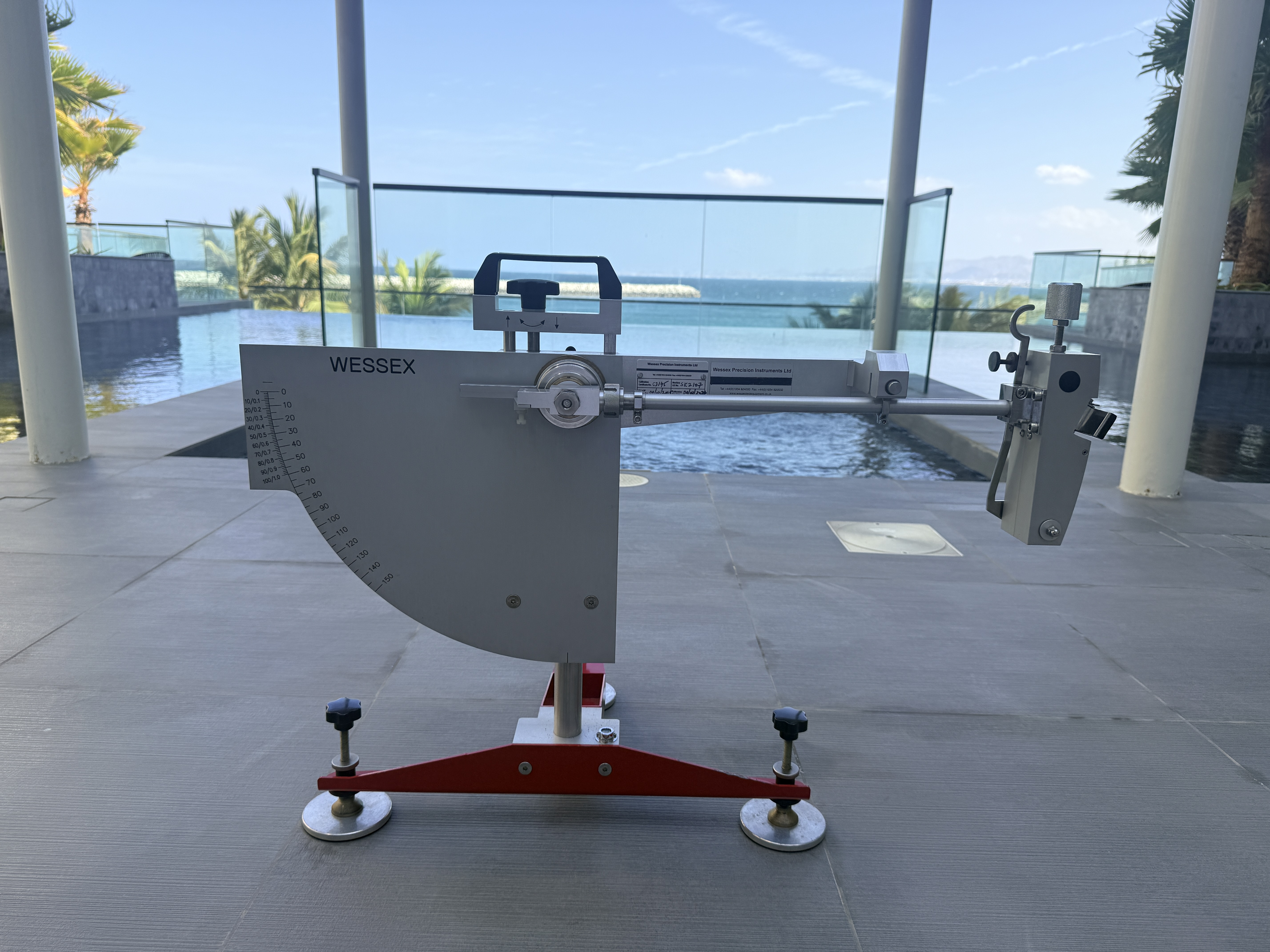
The Pendulum Tester, also known as the Portable Skid
Resistance Tester, is a tool for
assessing slip and skid risks on floors and road surfaces. It is designed for
organisations and professionals responsible for preventing accidents caused by
slippery
surfaces by accurately measuring surface friction.
Developed in the 1940s, the Pendulum Tester has stood the test of time and
remains one of
the most trusted methods for evaluating the slip resistance of pedestrian areas
and
traffic surfaces. Today, it is widely used across the globe by health and safety
consultants, flooring and tile manufacturers, testing laboratories, highway
authorities,
building maintenance teams, and expert investigators.
Pendulum slip testing helps identify potential slip hazards before accidents
occur and
plays a key role in investigating the causes of slip and fall incidents. Its
portability
allows it to be used both on-site and in laboratory environments.
From swimming pools and spas to hospitals and office buildings; architects and
facility
managers now have access to a clear, quantifiable method to evaluate surface
safety.
Even when tiles or floors are rated with high slip resistance classes,
real-world
conditions may not reflect those ratings. The SRT Pendulum test offers these
insights
for accident prevention, facility certification, surface risk re-evaluation, and
resolving safety complaints.
The tester is built using proven technology and is recognised as the preferred
slip
resistance assessment method by the UK Slip Resistance Group (UKSRG). It
complies with
major international standards like EN16165:2021, BS EN 13036-4, BS 7976, BS EN
1097-8,
ASTM E303, and AS/NZS 4586. Its robust construction is designed for long-term
use, often
delivering accurate performance over several decades.
✓ HOW IT WORKS
The pendulum slip test provides an accurate measure of real-world slip risk.
Simple Testing Steps
1. Site Preparation
The area is inspected and cleared of loose debris. Testing is carried out
under normal conditions, including wet testing where required.
2. Setup & Calibration
The pendulum tester is set up and calibrated on-site. A standard rubber
slider is fitted to replicate barefoot or footwear use.
3. Testing
The pendulum swings across the surface in a controlled motion. Tests are
performed in required directions and conditions, generating a Pendulum Test
Value (PTV).
4. Risk Classification
Multiple readings are averaged to determine slip risk:
0–24:High risk
25–35:Moderate risk
36+ :Low risk
45+ :Required for wet/high-risk areas
5. Reporting
A clear report is provided with results, compliance status, and safety
recommendations where needed.
The Portable Skid Resistance Tester operates on the Izod pendulum principle. A pendulum
of known mass rotates around a vertical spindle, with its head fitted with a
standardised rubber slider of specific hardness and resilience. When released from a
horizontal position, the pendulum swings down and strikes the test surface at a constant
speed.
The amount of friction between the slider and the surface determines how far the pendulum
continues to travel after impact. This loss of energy is measured and displayed as the
Pendulum Test Value (PTV) on a clearly marked scale. A higher PTV indicates greater slip
resistance and a safer surface.
Testing is carried out in multiple directions and under both wet and dry conditions to
closely represent real walking scenarios, making pendulum slip testing a reliable and
realistic method for slip resistance assessment.
Understanding Slip Risk Levels
PTV scores show how safe or slippery a surface is, in line with Dubai Building Code and
Dubai Municipality requirements.:
Pendulum testing is needed wherever people walk and where water, spills, or
cleaning can
make floors slippery. This includes hotels, malls, swimming pools, spas,
hospitals,
schools, offices, and public walkways. Regular testing helps reduce slip
accidents and
improve safety.
Where the Pendulum Tester Is Applied
Hotels, bathrooms, bathtubs, showers, and pool decks
Spas and wellness areas
Commercial kitchens
Pedestrian walkways
Benefits of Pendulum Slip Testing
Accurate and repeatable results
Easy to use on-site
Non-destructive testing
Suitable for indoor and outdoor surfaces
Globally accepted test method
✓ Book a pendulum slip test when:
Opening a new facility - Verify slip resistance before
handover and ensure compliance from day one.
After a slip, trip, or fall - Determine whether the floor
surface contributed to the incident and reduce the risk of recurrence.
Changing cleaning products or floor treatments - New
detergents, coatings, or polishes can significantly affect slip resistance.
Installing or replacing flooring - Confirm actual on-site
performance, even if the flooring is labelled “anti-slip.”
During routine safety inspections - Many facilities include
periodic slip testing as part of their risk management program.
When requested by insurers or auditors - Measured PTV
results provide clear evidence of floor safety and compliance.
Slip Resistance Compliance in the UAE
The Dubai Building Code sets minimum PTV values for different areas. These limits apply
to both barefoot and footwear use.
Indoor – Dry Areas
Surface Type
Required PTV
Level surfaces
15 – 35
Inclined surfaces < 5% slope
15 – 35
Inclined surfaces ≥ 5% slope
≥ 35
Outdoor & Wet Areas
Surface Type
Required PTV
Level surfaces
35 – 45
Inclined surfaces < 5% slope
35 – 45
Inclined surfaces ≥ 5% slope
≥ 45
High-Risk Wet Areas (Mandatory: ≥ 45 PTV)
Location
Required PTV
Street pavements
≥ 45
Swimming pools
≥ 45
Showers
≥ 45
Toilets & wet rooms
≥ 45
PTV vs R Rating – What’s the
Difference?
About R-Ratings (Ramp Test Method)
R-Ratings, also known as Ramp Ratings, are determined using the Floor Surface Ramp Test,
a test method used worldwide to assess slip resistance under specific, controlled
conditions. This test evaluates the interaction between a particular floor surface, a
defined contaminant, and specific footwear or bare feet to produce an R-Rating (for shod
use) or an ABC Rating (for barefoot use).
What the Ramp Test Measures
The Ramp Test is mainly used for comparison. It helps show which type of flooring
performs better than another when tested under the same controlled conditions. During
the test, the floor is slowly tilted until slipping occurs. The steeper the angle at
which slipping happens, the better the slip resistance of that surface.
However, because the test is carried out in very controlled conditions, the results do
not guarantee how the floor will perform in real, everyday use. Instead, they show a
possible range of slip resistance, which is why additional testing, such as pendulum
testing, is required for floor safety.
How the Ramp Test Is Performed
In a ramp test, the flooring sample is securely fixed to an adjustable ramp. The ramp is
gradually raised, usually by one degree at a time, while a trained test operator walks
back and forth at a slow, controlled pace.
For industrial and shod-foot environments, the operator wears standardised safety boots
with a defined sole pattern and rubber hardness. The ramp surface is typically
contaminated with motor oil. When the operator slips, the ramp angle at that moment is
recorded. The test is repeated multiple times, and the results are averaged to determine
the final angle, which is then converted into an R-Rating.
For barefoot environments such as wet leisure or hygiene areas, the operator is
barefoot, and the contaminant used is soapy water at a specified dilution. The resulting
classification is known as an ABC Rating.
R-Ratings and ABC Ratings Explained
• Shod Ramp Test : Determines R-Ratings: R9, R10, R11, R12, R13
Higher R-Ratings indicate better slip resistance under oily conditions with footwear.
SwissGrip anti slip treatment is R12 certified.
• Barefoot Ramp Test : Determines ABC Ratings: A, B, or C
Higher ratings indicate improved slip resistance for barefoot use in wet conditions.
PTV V/S R Rating
Feature
PTV (Pendulum Test Value)
R Rating (Ramp Test)
Test Location
Tested on the actual floor surface
Tested in a laboratory setting
Test Method
Simulates real walking conditions
Uses an inclined ramp method
Surface Conditions
Reflects real site conditions
Uses controlled test conditions
Regulatory Acceptance
Accepted in the UAE for legal and safety compliance
Used mainly for product classification
Primary Purpose
Confirms in-service floor safety
Compares slip resistance between floor products
Why SWISSGriP®
is a Reliable Choice
Our anti-slip treatment coatings are tested for heavy foot traffic, repeated cleaning,
water exposure, and outdoor conditions. Unlike many tiles that lose slip resistance over
time, SWISSGriP® is engineered for long-lasting performance while keeping your floor
design untouched.